

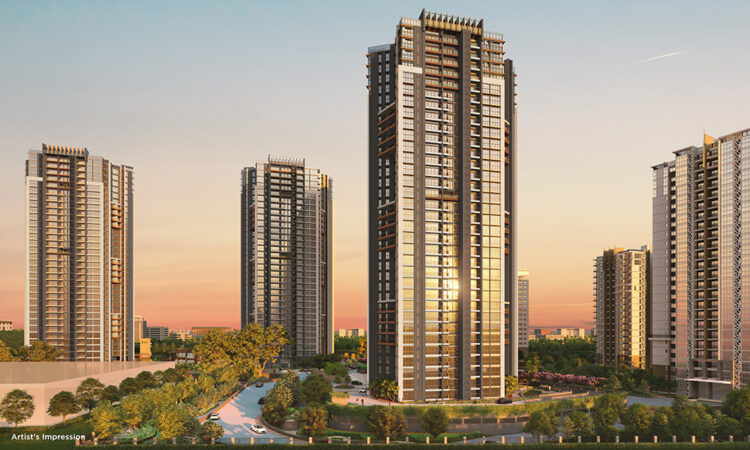

Hong Leong-Led Consortium Tops Bid for Tengah Condo Site at $821 psf ppr
The Government Land Sales (GLS) tender for the residential site along Tengah Condo recently concluded with a Hong Leong-led consortium emerging as the top bidder at a land rate of $821 per square foot per plot ratio (psf ppr). The winning bid underscores continued developer interest in strategically positioned residential parcels within emerging townships, even as broader market sentiment remains measured amid higher financing costs and evolving buyer affordability considerations. Tengah’s positioning as Singapore’s newest town, anchored by sustainability-led planning principles, continues to shape how developers evaluate long-term residential potential in the western region.
While the bid quantum may appear conservative relative to peak-cycle land rates observed in more established districts, it reflects a disciplined approach by developers navigating a market environment characterised by rising construction costs and cautious buyer sentiment. The Hong Leong-led consortium’s willingness to commit at this level suggests confidence in Tengah’s long-term fundamentals, including its master-planned residential framework, planned transport connectivity, and growing amenity base. These structural drivers form the foundation for Tengah’s gradual transition from a predominantly public housing township into a more balanced residential district with private housing components.
The land rate achieved for the Tengah site also provides a reference point for future pricing benchmarks within the township. As one of the earliest private residential parcels introduced in Tengah, the tender outcome is likely to influence developer expectations and buyer price sensitivity for subsequent private launches in the area. Market participants often view early GLS outcomes as signals of how developers are positioning themselves for medium-term residential demand, particularly in emerging townships where historical pricing data is limited.
Bid Pricing Reflects Discipline Amid Market Uncertainty
Developers participating in recent GLS tenders have increasingly adopted disciplined land acquisition strategies, reflecting a broader recalibration of risk appetite in the residential market. Elevated construction costs, labour shortages, and uncertainties around global economic conditions have prompted developers to place greater emphasis on cost management and project viability. The $821 psf ppr bid for the Tengah Condo site reflects this cautious approach, balancing long-term growth potential against near-term market uncertainties.
In emerging townships such as Tengah, developers must also account for the time required for surrounding infrastructure and amenities to mature. While the township benefits from comprehensive master planning, the full realisation of Tengah’s transport network, retail clusters, and community facilities will occur progressively. Developers bidding for early private residential sites must therefore factor in longer gestation periods before the township reaches full maturity. This consideration often tempers aggressive bidding behaviour, as developers seek to preserve pricing flexibility for eventual project launches.
Despite these considerations, the presence of competitive bids indicates that developers remain selective rather than disengaged. Sites with clear long-term fundamentals, such as Tengah’s planned integration with transport corridors and sustainability-led urban design, continue to attract developer interest. This selective participation suggests that while the residential market has entered a more measured phase, confidence in well-located, master-planned townships remains intact.
Strategic Significance of Early Private Housing in Tengah
The Tengah Condo site tendered under the GLS programme represents one of the earliest opportunities for private sector participation in Tengah’s residential evolution. Early private developments often play a formative role in shaping market perceptions of a new township’s private housing segment. The pricing and absorption performance of initial launches can influence how subsequent private projects are received by the market, setting expectations for quality, pricing, and positioning.
As Tengah’s residential ecosystem matures, early private housing projects may benefit from progressive improvements in liveability and connectivity. New towns typically experience evolving demand patterns as supporting amenities, schools, transport nodes, and community facilities become operational. Early adopters may accept initial inconveniences in exchange for longer-term lifestyle benefits as the township matures. This dynamic can contribute to a gradual broadening of the buyer base as the township’s liveability profile strengthens over time.
Tengah Garden Residences is among the private residential developments expected to reflect broader market dynamics shaped by Tengah’s evolving residential framework. As Tengah’s infrastructure rollout progresses, private housing within the township may increasingly be evaluated based on long-term liveability considerations rather than short-term market cycles alone. This shift in buyer evaluation criteria may support more stable demand patterns for private residential developments introduced during Tengah’s formative years.
Implications for Residential Pricing and Buyer Sentiment
The $821 psf ppr land rate achieved by the Hong Leong-led consortium provides useful context for assessing potential pricing parameters for future private residential launches in Tengah. While final launch pricing will ultimately depend on construction costs, design specifications, and prevailing market conditions at the time of launch, GLS tender outcomes often influence how buyers and developers anchor their pricing expectations. Buyers may interpret disciplined land pricing as a signal that developers are mindful of affordability constraints, potentially supporting more measured pricing strategies for future launches.
For buyers evaluating private housing options in emerging townships, tender outcomes also offer insights into developer confidence in the area’s long-term prospects. Developer willingness to commit capital to early private sites reflects confidence in Tengah’s planning framework and its potential to mature into a desirable residential node. Over time, as Tengah’s residential and commercial amenities become more established, buyer sentiment may increasingly align with the township’s long-term growth narrative rather than short-term market fluctuations.
As Tengah continues to evolve, future GLS tenders and private residential launches will provide further signals on how developers and buyers respond to the township’s maturation trajectory. The outcome of the Hong Leong-led consortium’s bid for the Tengah Condo site serves as an early indicator of market positioning within this emerging residential district, offering valuable insights into how stakeholders are navigating the balance between caution and long-term optimism in Singapore’s evolving residential landscape.