

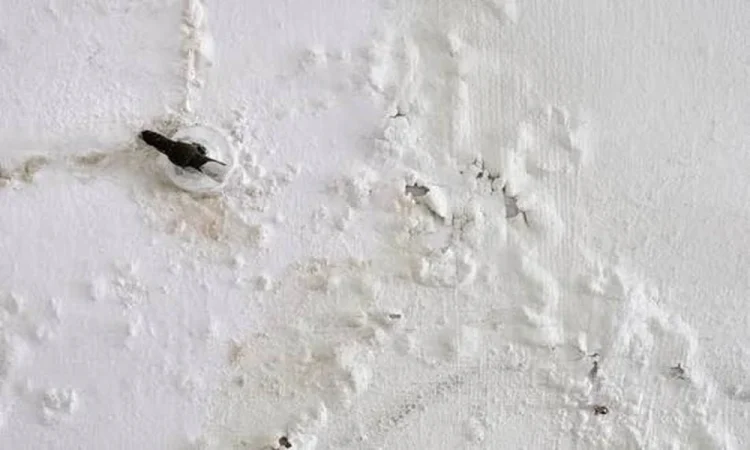

Weeks after a dishwasher overflows or a heavy rain, a faint brown ring shows up on the ceiling, or a closet starts to smell like an old basement. Nothing is dripping and nobody remembers a recent spill, so it is easy to shrug it off. Those late arrivals are usually the first visible evidence of water that has been sitting somewhere out of sight, inside a ceiling, behind a wall or under a floor.
The good news is that hidden water tends to leave a pattern. Each sign points toward a short list of causes, and knowing which list you are looking at tells you what to do first. Much of the work in water damage restoration starts exactly this way, with a symptom that appears long after the event and a search backward for the source. Quincy’s housing makes that search a little harder. Many homes are older two and three family buildings with plaster ceilings, stacked bathrooms and basements set into damp coastal ground, while New England winters bring ice dams and nor’easters drive rain sideways into siding and window frames.
When a sign suggests moisture has been lingering long enough to feed growth, Quincy water damage restoration from American Restoration Professionals brings two services to the same problem. Their Mold Removal team locates the source of growth, removes it safely and treats the affected area, and their Water Damage crews handle extraction, drying and moisture detection so the conditions that fed the mold do not return. If one of the signs below sounds familiar, schedule a moisture check with their IICRC certified team before the next stain shows up.
A Ceiling Stain That Keeps Coming Back
A stain that fades, then returns in the same shape, almost always has a repeating water source. Under a bathroom, the usual suspects are a failing wax ring, a cracked drain fitting or worn grout and caulk around a tub. Under an attic or a flat roof, look at flashing, vent boots and ice dams along the eaves. A stain that grows only after showers points to plumbing, while one that grows only after storms points to the roof.
- Note when the stain changes, after showers, after rain or after a thaw.
- Photograph it with a coin or tape measure in the frame so you can compare size over time.
- Avoid poking a sagging ceiling and keep people out from under it.
A Musty Smell With No Visible Source
An earthy smell in a closet, cabinet or finished basement usually means moisture and organic material have been in contact long enough for microbial growth to start. The EPA notes in its guide to mold, moisture and your home that mold spores will not grow without moisture, which is why cleaning a surface without fixing the water problem rarely holds. In Quincy basements the cause is often groundwater seepage or summer condensation on cold foundation walls and pipes rather than a leak.
- Open the space and ventilate it with a fan pointed out a window.
- Check the backs of cabinets, under sinks and behind stored boxes along exterior walls.
- Run a hygrometer for a few days to see whether room humidity, not a leak, is the driver.
Bubbling or Peeling Paint
Paint lifts when moisture pushes from behind it. Blisters low on a wall near a bathroom suggest a supply or drain line inside the cavity. Peeling around a window points to failed flashing or caulk letting wind driven rain into the frame. Widespread peeling on exterior walls of a bathroom with no working exhaust fan is often condensation.
Warped or Cupping Flooring
Hardwood that cups, with edges higher than the centers, is absorbing moisture from below. Over a basement, that can be high humidity rising through the subfloor. Near a kitchen or laundry, suspect a slow appliance leak. Laminate and vinyl plank can hide water for a long time before the seams swell.
- Shut off the supply valve to nearby appliances.
- Pull the toe kick or move the appliance to look for staining underneath.
- Keep foot traffic off soft spots until the subfloor has been checked.
A Sudden Jump in the Water Bill
A higher bill with no change in habits is one of the few signs that points straight at plumbing. EPA’s WaterSense program suggests checking your water meter before and after a two hour period when no water is being used, since any change means you probably have a leak. A running toilet is the common culprit, but a leak in a supply line inside a wall or under a slab will show up the same way.
Damp Baseboards After Rain
Baseboards that darken or feel damp after a storm point outward, toward clogged gutters, downspouts dumping against the foundation, grading that slopes toward the house or gaps around sill plates and windows. Nor’easter rain tends to find these weak spots on the windward side of a house first.
Reading the Signs Side by Side
| Sign | Likely cause | What to do first |
|---|---|---|
| Ceiling stain that returns | Bathroom plumbing above, roof flashing or ice dams | Track when it grows and photograph it |
| Musty smell, nothing visible | Seepage, condensation or a slow hidden leak | Ventilate and measure humidity |
| Bubbling or peeling paint | Leak in the wall cavity, window leak or condensation | Check what sits behind or above the wall |
| Warped or cupping floor | Appliance leak or moisture rising from below | Shut off nearby supply valves |
| Water bill jump | Running toilet or hidden supply line leak | Run the meter test |
| Damp baseboards after rain | Gutters, grading or gaps in the exterior | Inspect gutters and downspouts |
When a Moisture Check Earns Its Keep
Some of these signs can be solved with a flapper, a tube of caulk or a cleaned gutter. Others leave you guessing, especially when two causes overlap, such as a basement that has both condensation and a slow seep. A professional moisture check uses meters and thermal imaging to map where water actually sits inside walls, ceilings and subfloors, which separates a plumbing leak from a roof leak from condensation without opening up more of the house than necessary. That makes the most sense when a stain returns after a repair, when a smell persists after cleaning, or when flooring and baseboards stay damp with no clear source. Finding the water early keeps a small repair from turning into a larger one.