

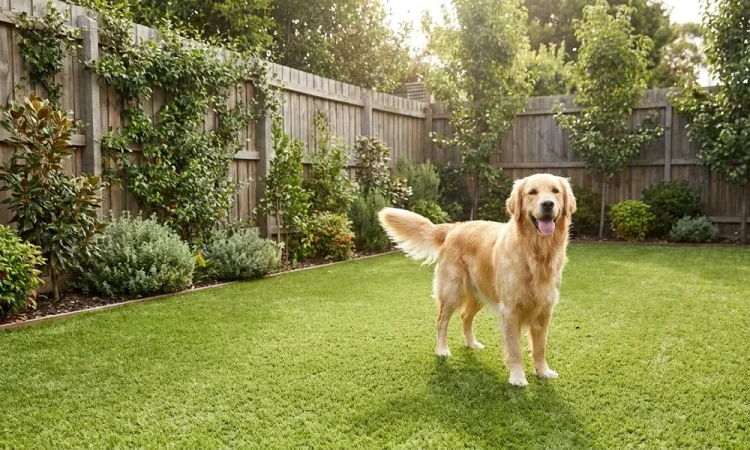

A dog run looks like one of the easiest amenities on your property. There’s no mowing, no reseeding, and no mud after a storm. Then a resident emails to say the courtyard smells, a prospect wrinkles her nose on a tour, and someone asks why water is sitting by the gate.
Shared turf rarely fails all at once. It fails quietly, below the surface, until a resident notices first. The good news is that a simple program costs little to run and prevents most of those emails.
Why shared turf deserves a real plan
Pet amenities have become a leasing issue. Apartments.com reported in 2023 that over 40 percent of renters consider pet-friendly policies and features essential when looking for an apartment. It also found that nearly three quarters of listed properties allow dogs or cats, yet just under 2 percent offer a dog park.
Allowing pets no longer sets you apart. A clean, usable place for them can. But the amenity only helps while it works. A dog run that smells does the opposite of what you built it to do.
Shared turf also takes more abuse than a backyard. One family dog visits a yard a few times a day. A community run may take dozens of visits from dozens of animals, every day, in a small footprint. Residents don’t all clean up, and nobody owns the problem.
Set a schedule by area, not by property
The most common mistake is giving the whole property one cleaning schedule. A rooftop relief area and a decorative strip by the leasing office have almost nothing in common. Set the schedule by how each area is used.
| Area | Typical use | Suggested professional service |
|---|---|---|
| Dog runs and relief areas | Daily, concentrated pet use | Monthly |
| Pet daycare or boarding yards | Heavy, constant pet use | Monthly or more often |
| Amenity lawns and courtyards | Foot traffic, events, some pets | Quarterly |
| Pool surrounds and patios | Foot traffic, spills, sunscreen | Quarterly |
| Decorative or entry turf | Little direct use | Twice a year |
Treat these as starting points. If your dog run is small and busy, or complaints start before the next visit, shorten the interval. Our commercial turf cleaning walkthroughs follow the same logic: the cadence comes from how each area is used.
What your on-site team should handle
Professional visits work far better when the daily basics are covered. Keep the list short enough that it actually gets done.
Daily
- Walk the area and remove solid waste and trash.
- Restock bags and empty waste stations.
Weekly
- Rinse the most-used spots, ideally early in the day.
- Blow or sweep leaves and debris. The Synthetic Turf Council warns that debris left on the surface can inhibit drainage and compact the infill.
Monthly
- Check for pooling, loose seams, lifted edges, and exposed backing.
- Brush worn paths, especially near gates and benches.
Make sure staff know what to avoid. Bleach, harsh disinfectants, and pressure washers can all cause problems. So can cleaning products containing alcohol or acetone solvents. If you want residents to help, a clear sign at the gate about pick-up rules goes further than a line in the lease.
Keep a maintenance log
This step takes minutes, and it pays off the day something goes wrong. The Synthetic Turf Council recommends keeping a maintenance log, which warranties often require. That guidance was written for sports fields, but the logic applies to any installation that cost real money.
At a minimum, record the date, the area, the work done, and who did it. Add photos of any problem spots. A simple spreadsheet is fine. You’ll use it to spot patterns, answer owner questions, back up a warranty claim, and show a resident that a complaint was handled.
Before you sign a maintenance contract, read the warranty on the turf itself. Some warranties limit approved methods or vendors, and improper maintenance can void coverage.
How to vet a turf cleaning vendor
Artificial turf isn’t a hard surface, and it isn’t a carpet. Ask specific questions before adding a vendor to your approved list.
- What’s your process? Look for debris removal, extraction, odor treatment, grooming, and a drainage check, in a clear order.
- How do you handle odor? The answer should address the source. A fragrance alone won’t last.
- Does the service disinfect? Cleaning and disinfecting are different things. If you need disinfection, confirm the product, its label claims, and its suitability for your turf.
- How long is the area closed? Ask about dry time, and whether large areas can be done in zones.
- Can you work around residents? Early mornings or quiet windows may matter for courtyards.
- What paperwork can you provide? You’ll want a certificate of insurance, a W-9, and portal onboarding if you use one.
- What will I get after each visit? A short condition report feeds straight into your log.
- What won’t you do? A good vendor will tell you when the real issue is a seam, the base, or the end of the turf’s life.
Cleaning has limits, and a vendor should say so. Poor grading or a compacted base won’t improve with another extraction.
Handling the complaint that’s already in your inbox
If residents are already complaining, move quickly and in this order:
- Inspect the area at the warmest part of the day, when odor is strongest.
- Do a same-day rinse and remove any waste.
- Book a targeted pet odor treatment for the affected zone.
- Tell residents what’s happening and when it will be finished.
- Shorten the service interval so the problem doesn’t return next month.
If water is also pooling, treat that as urgent. Besides the slip risk, standing water gives mosquitoes a place to breed. Texas A&M extension entomologists note that some mosquitoes can complete their life cycle in 8 to 10 days under favorable conditions.
The properties with the fewest turf complaints aren’t the ones with the best turf. They’re the ones that treat it like any other building system, with a schedule, an owner, and a paper trail.